
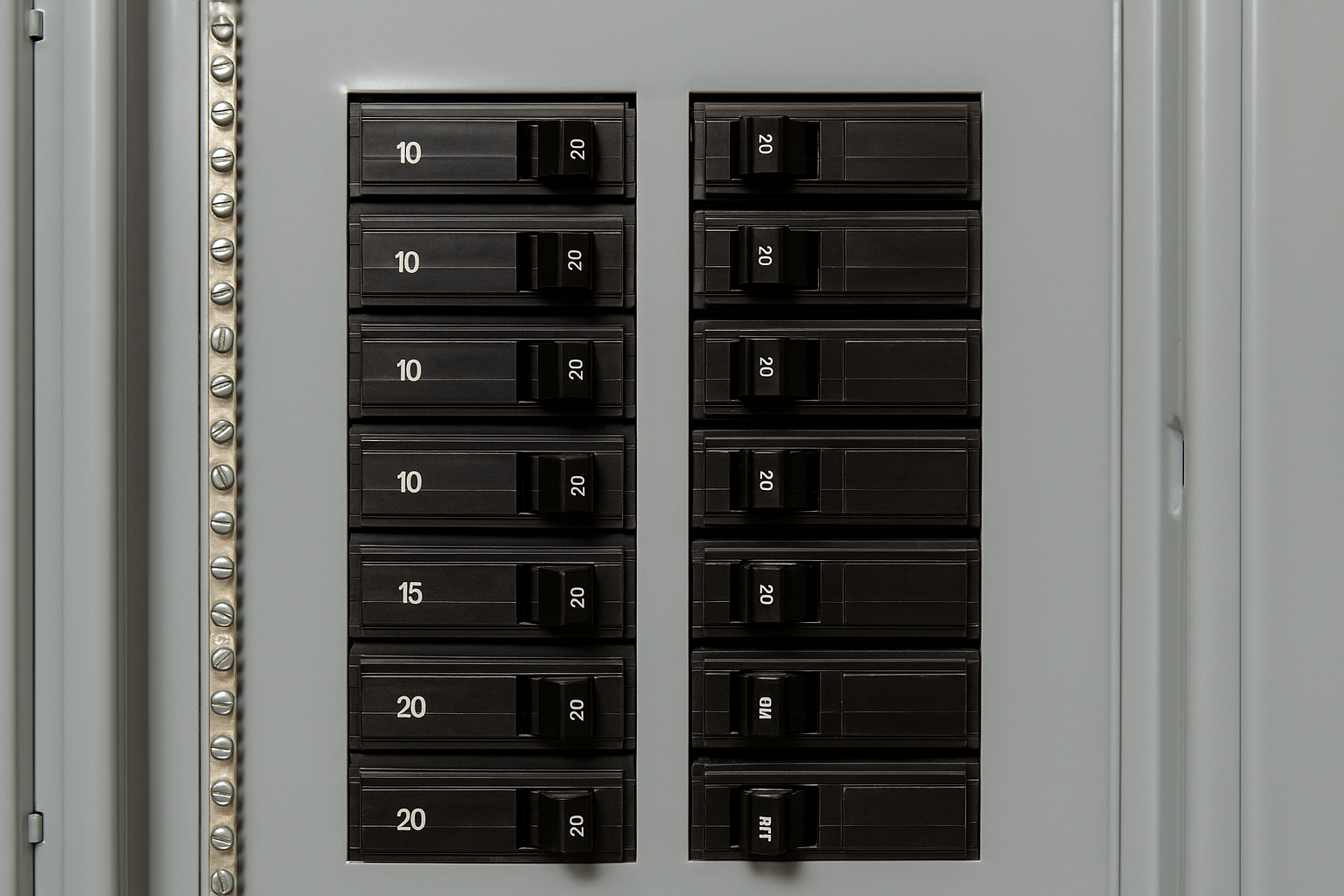
A circuit breaker that keeps tripping is more than just a nuisance — it's your electrical system telling you something's wrong. Whether it's a simple overload or a sign of a more serious issue, it's important to troubleshoot the problem safely and thoroughly. Here's a practical guide to help you understand why your breaker keeps tripping — and what you can do about it.
Why Do Breakers Trip?
Breakers are designed to protect your home by cutting off power when there's too much current flowing through a circuit. Tripping can be caused by:
- Overloaded circuits (too many devices drawing power)
- Faulty appliances
- Short circuits
- Ground faults
- Wiring issues
Step-by-Step Troubleshooting
- Identify the Tripped Breaker: Open your breaker panel and look for a switch that's stuck between the On and Off position. That's your tripped breaker.
- Unplug All Devices: Before you reset anything, unplug all devices from outlets connected to the tripped circuit. This prevents re-tripping caused by a continued overload.
- Reset the Breaker: Push the breaker firmly to the Off position, then flip it back to On. You should feel it click into place.
- Test for Overload: Plug in one or two devices at a time. If the breaker trips again, you're likely overloading the circuit.
- Distribute the Load: Avoid running high-powered appliances (like space heaters, microwaves, or hair dryers) on the same circuit. Spread out your devices across different circuits if possible.
- Check for Faulty Appliances: One faulty device can cause repeated tripping. Plug in each item one by one and monitor the breaker. If it trips when a specific appliance is connected, that appliance may need repair or replacement.
- Inspect for Loose or Damaged Wiring: Check for visible signs of damage — such as frayed wires or scorch marks — at the outlet or breaker panel. Do not attempt to repair wiring yourself unless you're qualified.
When to Call a Professional
If the breaker continues to trip after trying the above steps, it could be due to internal wiring damage, short circuits, a faulty breaker, or an outdated panel. At this point, it's time to contact a licensed electrician.
What Not to Do
- Don't replace the breaker with a higher amp rating. This doesn't solve the problem — it only masks it and increases the risk of overheating or fire.
- Don't ignore the issue. Repeated tripping is a warning sign, not something to "just live with."
If you notice a burning smell, melted plastic, or discoloration near your outlets or panel, turn off power immediately and call a pro. A tripping breaker isn't just annoying — it's a sign that something needs your attention.
If the breaker itself is the problem, we make it easy to find the exact replacement — all brands, all amperages, same-day shipping.