
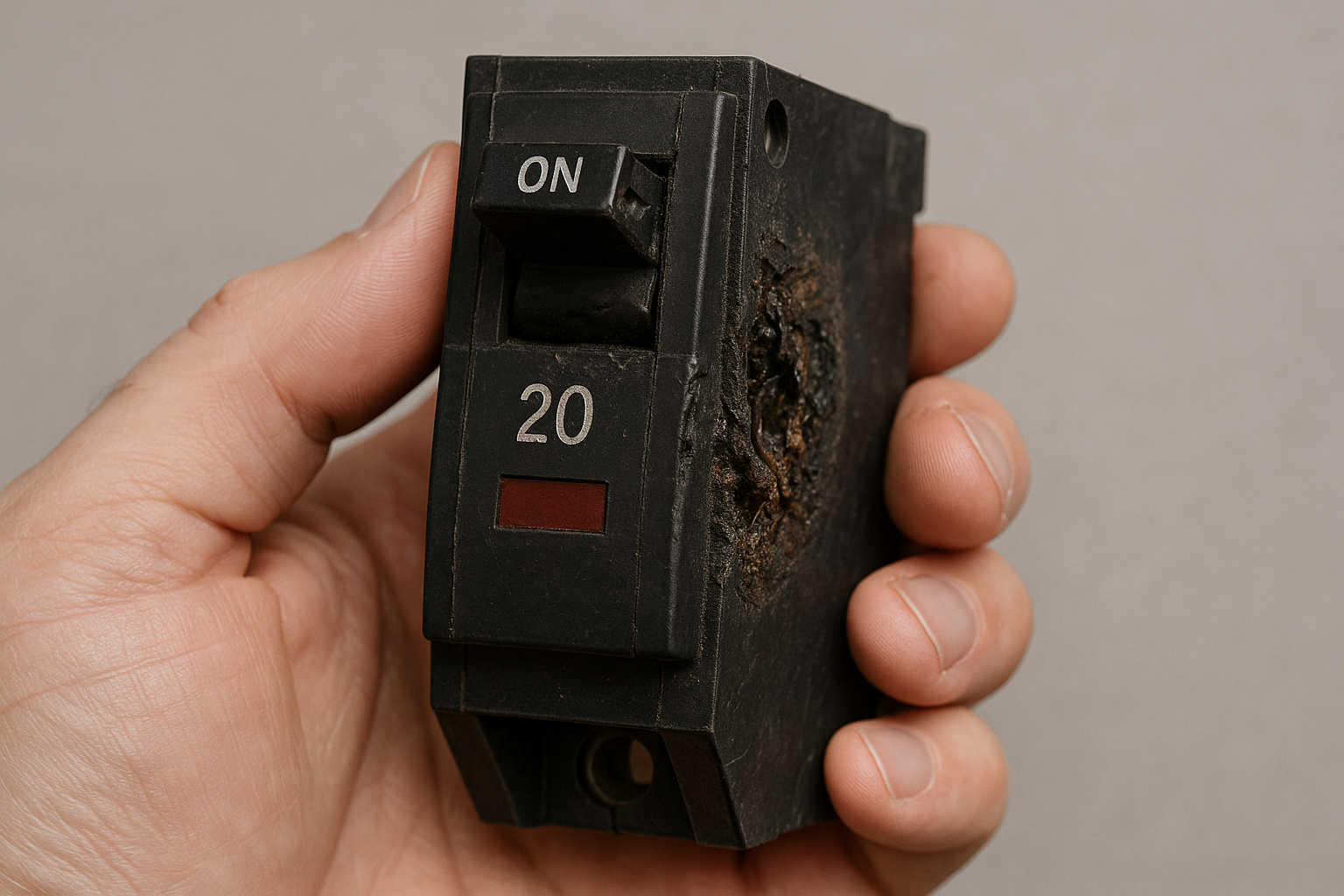
Your circuit breaker is the heart of your home's electrical safety system. It protects your wiring and appliances by automatically shutting off power when a fault is detected. But what happens when the breaker itself becomes the problem? A bad circuit breaker can cause everything from nuisance tripping to serious fire hazards. Here's how to tell.
1. Frequent Tripping
Does your breaker keep shutting off, even when you're barely using any power? A breaker that trips repeatedly under low load could be signaling a fault within itself — or an overloaded circuit.
2. Breaker Won't Stay Reset
If the breaker trips and refuses to stay in the "on" position, it's likely a sign of internal failure. This is more than a nuisance — it's a red flag that something's not working properly.
3. Visible Damage
Check the breaker panel for any visible signs of trouble: scorch marks, melted insulation, or discolored plastic. These are strong indicators that a breaker has overheated or shorted.
4. Burning Smell
A burning smell coming from the breaker panel is a serious issue. It could mean the breaker — or the wiring attached to it — is overheating. Shut off power and contact an electrician immediately.
5. Breaker is Hot to the Touch
Circuit breakers should never feel hot. Warmth might be normal under load, but heat is not. If your breaker is hot to the touch, it could be faulty or handling more current than it should.
6. Buzzing or Crackling Sounds
Unusual noises like buzzing, crackling, or humming from your breaker panel can signal loose connections or arcing inside a breaker. These are signs of potential failure and should not be ignored.
7. Appliances Not Working Properly
Poor appliance performance — such as a stove not heating evenly or a washer starting and stopping — might trace back to a weak or failing breaker that isn't delivering consistent power.
8. Flickering Lights
Lights flickering in one part of the house can be caused by a loose wire or a failing breaker. If it's happening on a single circuit, that's a good place to start looking.
9. Old Breakers
Like everything else, breakers wear out over time. If your panel is more than 20–30 years old and you're seeing issues, age may be the culprit.
10. Overloaded Circuit
Even a good breaker can go bad if pushed beyond its limits for too long. If you've been overloading a circuit, that wear and tear could lead to failure.
11. Electrical Surges
A recent lightning strike or power surge? Your breaker may have taken the hit. Surges can permanently damage internal components and weaken the breaker's ability to function.
When in Doubt, Call a Pro
If you suspect a faulty breaker, don't risk your safety. A malfunctioning breaker is not just inconvenient — it can be dangerous. Your home's safety is worth the call.
Need a replacement breaker fast? We stock a full range of circuit breakers — all brands, all types — with same-day wholesale shipping.