
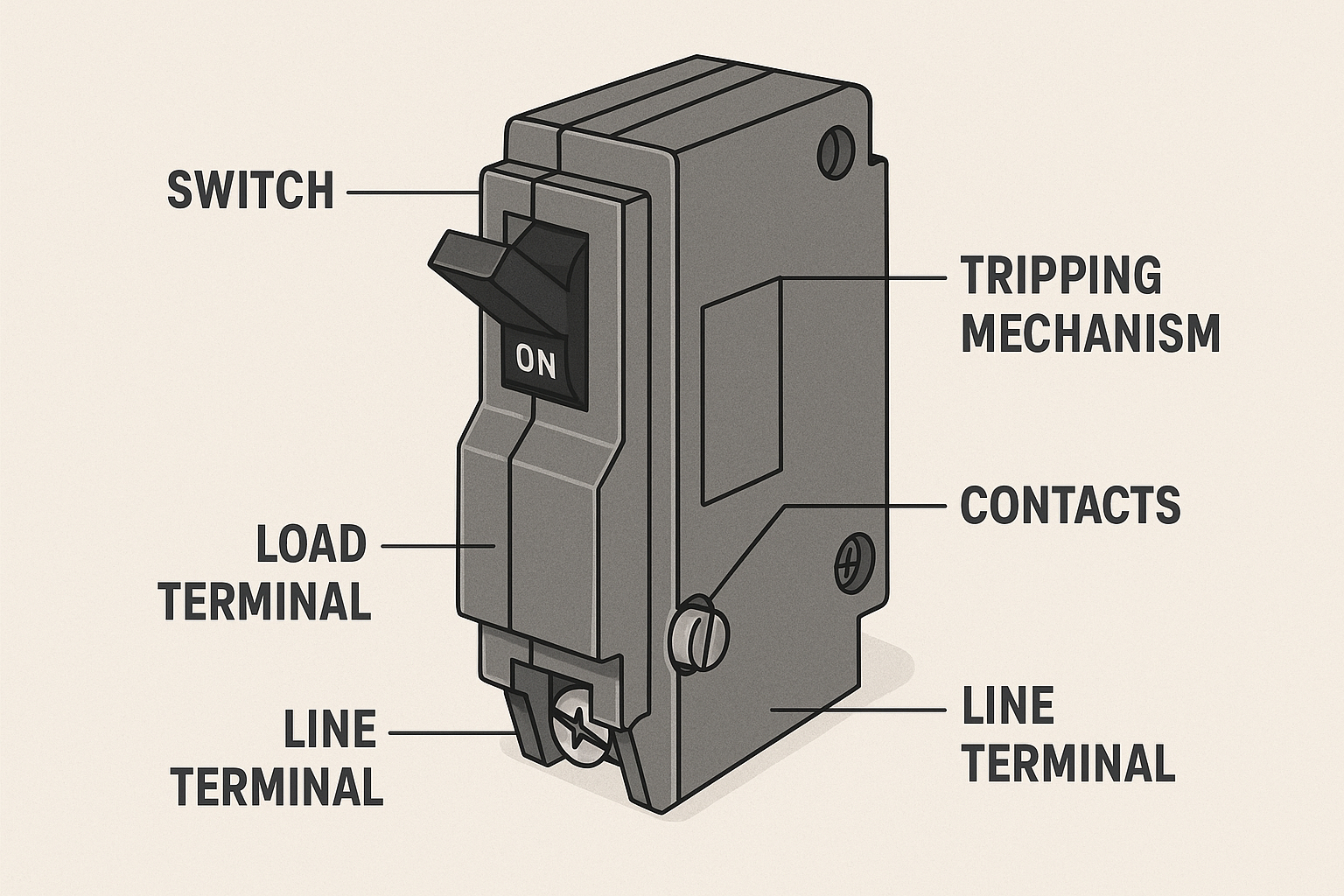
Circuit breakers are one of the most essential components of any electrical system, acting as your home or facility's first line of defense against electrical damage and fire. But what exactly are circuit breakers, and how do they work?
What Is a Circuit Breaker?
A circuit breaker is a safety device that automatically stops the flow of electricity when it detects an electrical fault — such as an overcurrent, overload, or short circuit. Think of it as a smart switch that knows when to shut things down before real damage occurs.
Why Circuit Breakers Matter
Without circuit breakers, wiring in your walls, outlets, and connected appliances would be vulnerable to overheating or catching fire from excessive current. Circuit breakers help:
- Prevent electrical fires
- Protect wiring and devices
- Ensure safety for people using the system
How Do Circuit Breakers Work?
When too much current flows through a circuit, the breaker's internal mechanism detects the excess and triggers a trip — breaking the circuit and stopping the flow of electricity. There are two primary causes:
- Overload: When a circuit is carrying more current than it was designed to handle (e.g., too many appliances plugged into one outlet).
- Short Circuit: When electricity takes an unintended path with little or no resistance, potentially causing a spark or surge.
Once the issue is resolved, most circuit breakers can be manually reset — a big advantage over older-style fuses, which had to be replaced.
Types of Circuit Breakers
There are several types, each designed for specific applications:
- Standard Circuit Breakers: Protect against basic overloads and short circuits in most residential systems.
- GFCI Breakers: Guard against ground faults, commonly used in bathrooms, kitchens, and outdoor areas.
- AFCI Breakers: Detect and stop arc faults, which are small electrical discharges that could lead to fires.
Where Are Circuit Breakers Found?
You'll typically find circuit breakers inside an electrical panel (also known as a breaker box or load center), usually located in basements, utility rooms, or garages. Each breaker controls a different circuit in the building.
Final Thoughts
Circuit breakers may seem small and simple, but they play a critical role in electrical safety. Whether you're a homeowner or a facility manager, understanding how breakers work can help you spot issues early — and appreciate the silent protection these devices provide every day.
Need replacement breakers or expert advice? We stock standard, GFCI, AFCI, and even hard-to-find breakers — ready to ship same day.