
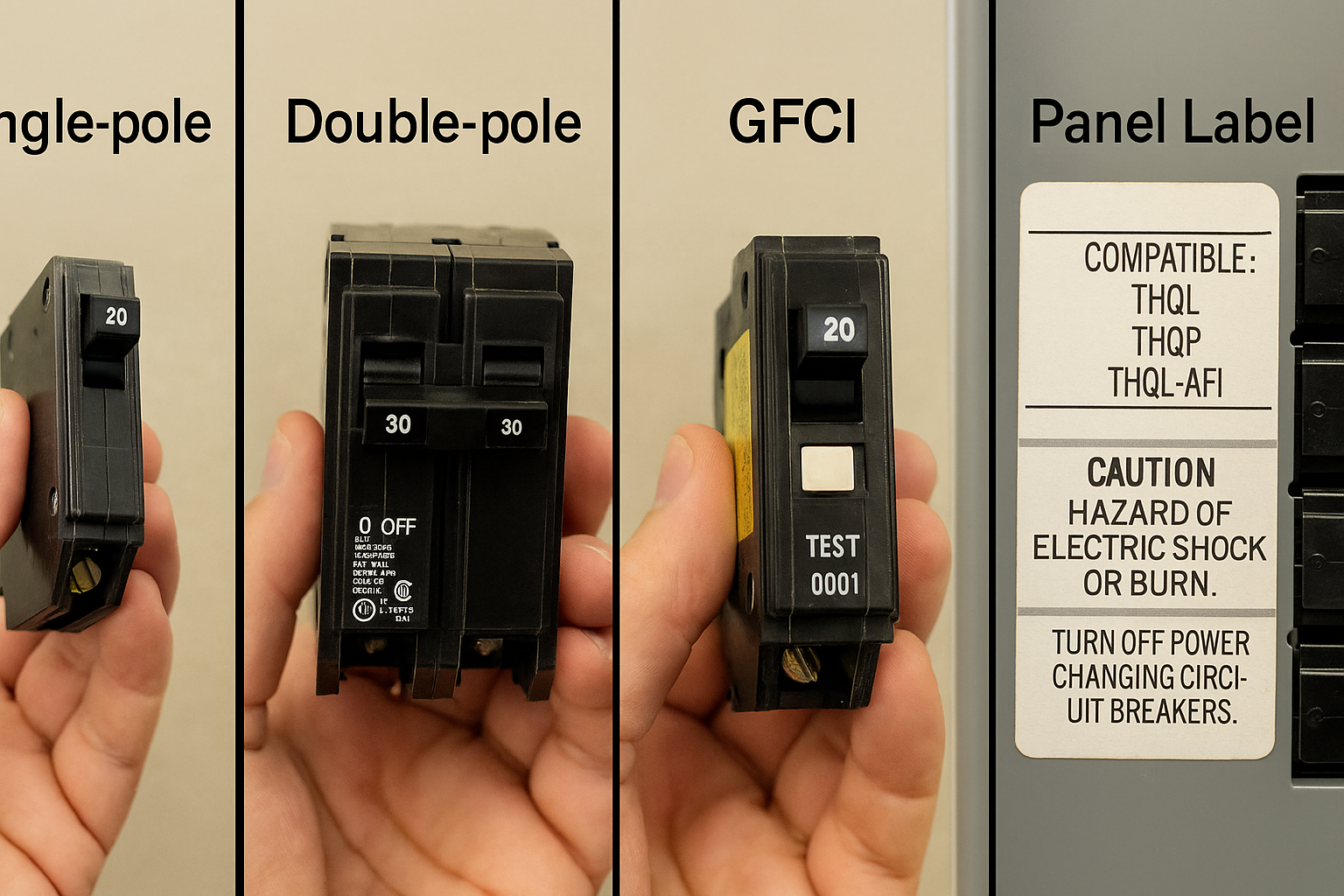
Choosing the right circuit breaker isn't just about grabbing any breaker off the shelf — it's about ensuring your electrical system remains safe, efficient, and up to code. Whether you're replacing a worn-out breaker or adding a new circuit, selecting the correct type is critical. Here's how to determine which circuit breaker you need — step by step.
1. Identify the Circuit's Requirements
Before anything else, understand the needs of the circuit the breaker will serve:
- Load: Calculate the total wattage or amperage of devices connected to the circuit. This helps determine the breaker's size.
- Voltage: Most residential circuits operate at 120 volts, but larger appliances like dryers or ovens may require 240 volts.
- Amperage: Typical breakers come in 15, 20, 30 amps and up. Match the breaker's rating to the circuit's expected load and wiring gauge.
2. Analyze Breaker Characteristics
Not all breakers are created equal. Understanding the physical and functional differences is key:
- Single-Pole vs. Double-Pole: Single-pole handles 120V circuits (standard outlets and lighting). Double-pole handles 240V circuits (large appliances).
- GFCI (Ground Fault Circuit Interrupter): Ideal for wet or outdoor areas like bathrooms, kitchens, or garages. Protects against electrical shock.
- AFCI (Arc Fault Circuit Interrupter): Designed to prevent electrical fires caused by arcing faults. Required in most modern residential living areas.
- Breaker Size and Shape: Match the form factor — single-pole breakers are typically half the width of double-pole breakers.
3. Consult Your Electrical Panel
Your panel will help guide you to the right type of breaker:
- Check the Panel Label: Often located inside the door, this label lists compatible breaker types and brands approved for your panel.
- Note the Panel Model Number: Use this to look up manufacturer-approved breakers online or in-store.
- Look for Existing Breaker Types: Match the physical design and brand of existing breakers when adding a new one.
4. Consider These Additional Factors
- Panel Capacity: Ensure your panel has room for an additional breaker and can handle the added load.
- Wiring Compatibility: Double-check that your wiring matches the amperage of the breaker you're installing (14 AWG for 15 amps, 12 AWG for 20 amps).
- Local Codes: Electrical codes vary by location. Always check your local regulations — or better yet, consult an electrician.
The wrong breaker can lead to tripped circuits, overheated wires, or worse — an electrical fire. Matching the breaker to your circuit's needs and your panel's specs is critical for safety and performance. When in doubt, don't guess — ask a licensed electrician.
Ready to find the right breaker? We carry breakers for every panel type and application — all brands, all specs — at wholesale prices.